Transportation
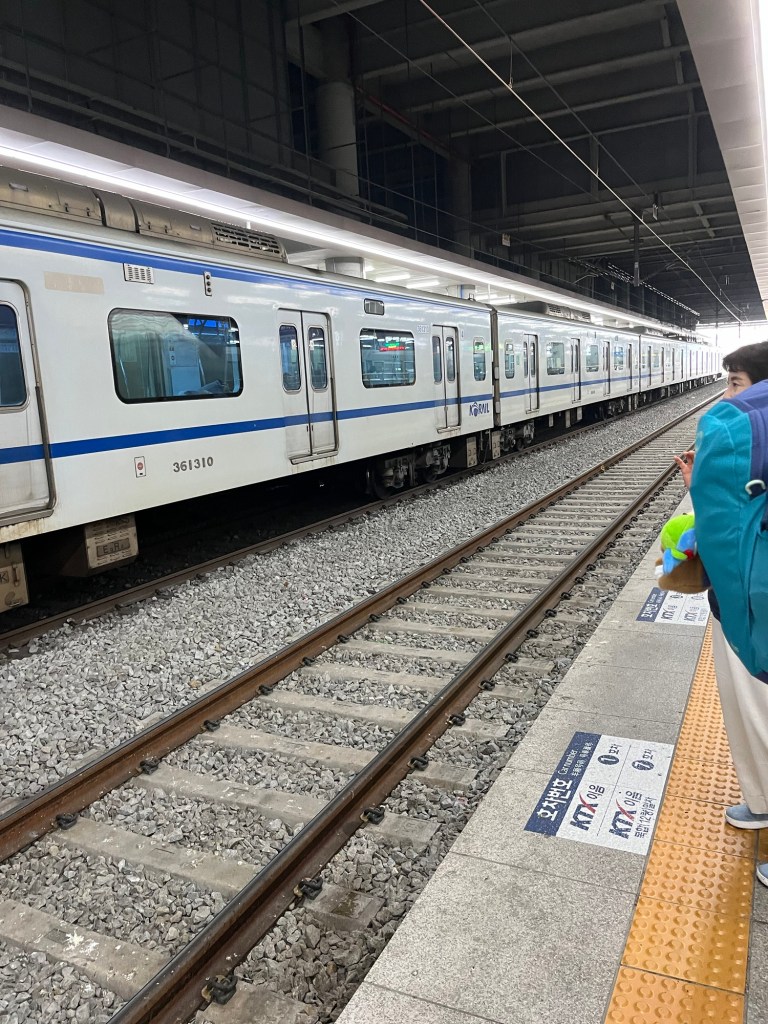
Transportation is one of the most dramatic differences between to two countries. As most would know the U.S. has very low density with under funded and unorganized transportation. This makes getting around without a car (especially for a tourist) very difficult. Unlike the U.S. South Korea has HSR that goes to the outer city’s and most places you would want to go to, subways for fast city trips, and many buses which travel to almost all places in Seoul. This is extremely accessible for all people and convenient. Not only does it benefit the tourist, but it benefits the local as well. The U.S. has no realistically viable rail for long distance, infrequent and unorganized bus schedules, and where there are subways they are lacking maintenance and operation area. The U.S. needs more public transportation, and not just South Korea is an example, pretty much every developed country is above the U.S. in transit.
Waste
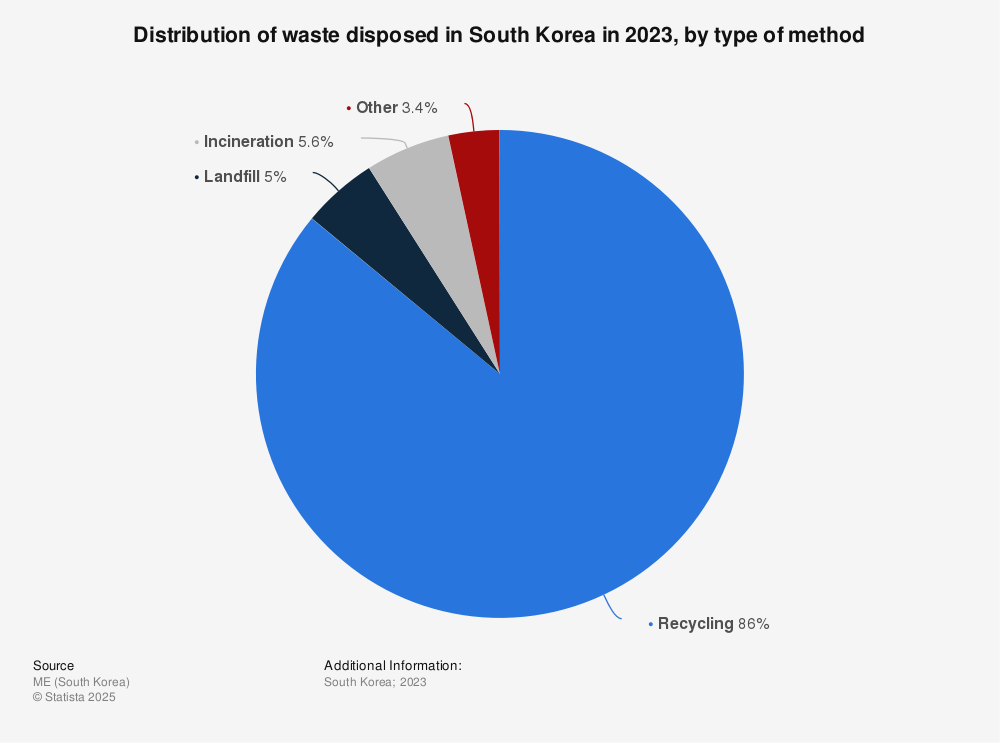
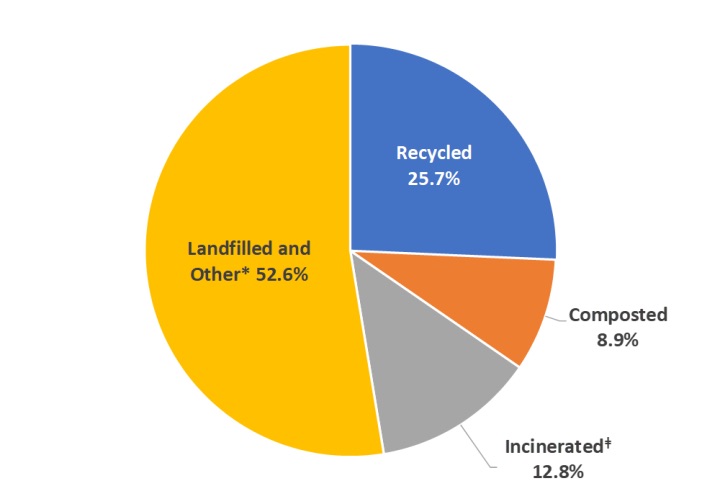
Mentioned before in the Mapo Facility post, Seoul has a pretty good trash disposal system, which they reuse waste to compost, create parks, and create energy. If we simply compare the recycling rates of the two countries we see that the recycling rate for South Korea is extraordinarily higher. In fact South Korea recycles 3x more of their waste than the U.S. and only 5% of their waste ends up in landfills whereas the U.S. is 10x worse in that category. In fact Korea is so good at recycling that the U.S. and Japan ship thousands of tons of waste to be recycled there every year. It’s okay for the U.S. to ship its waste to other countries if it’s handled properly. However, it is not acceptable for U.S. one of the largest producers of waste to have 50% of their waste end up in landfills.
Third Spaces
Korea has fantastic third spaces, majorly because of 2 factors; density and diversity. Density is better for the transportation, accessibility to other stores, and general urban fabric. The diversity of Korean third spaces is really what makes them great. Most stores are extremely small, there are little to no box stores in most spaces, and the market culture is still very strong. This allows for many different types of shops and other places in a small area, making them extremely accessible and makes for a more interesting environment. Contrarily, the U.S. lacks these two essential attributes. The sprawl in the U.S. has caused third spaces to become inaccessible —along with strict zoning policy— to anyone not willing to drive a decent distance and also makes the trip to a near by store arduous. Ethnic and racial diversity in the U.S. is pretty good, however the problem is not that type of diversity, but rather diversity of stores. In the U.S. most stores are chains that become uninteresting and unnecessarily large. Without diversity of stores every thing becomes repetitive and monotonous. As large factor of Third spaces is being able to view many different products or a wide range aof services each with unique elements. When places become too predictable they stop being interesting. The U.S. has lost our third spaces evidently because of sprawl, but also because we tried to cram them all into one giant box store.
 South Korea Sustainable Tourism